
Reviewed · HIKING & CANYONING DAY TRIPS
Benidorm: Via ferrata Ponoig, cerca de la Nucia
Ponoig via ferrata near Benidorm is interesting because it plays a trick on you. You spend the day doing an athletic, iron-clamp climb with very little horizontal wandering, and then the usual walk-off descent does not happen. Instead, the only way down is abseiling 25 and 35 metres.
Two things I especially like are the sheer vertical focus and the payoff view from the Sleeping Lion lookout. One drawback to consider is that this is not a gentle beginner via ferrata, and it is not suitable if you have vertigo.
Key highlights you should know before you go
- Vertical climbing on iron clamps keeps you looking up and moving, not strolling around.
- Two distinct vertical sections make the route feel structured, not random.
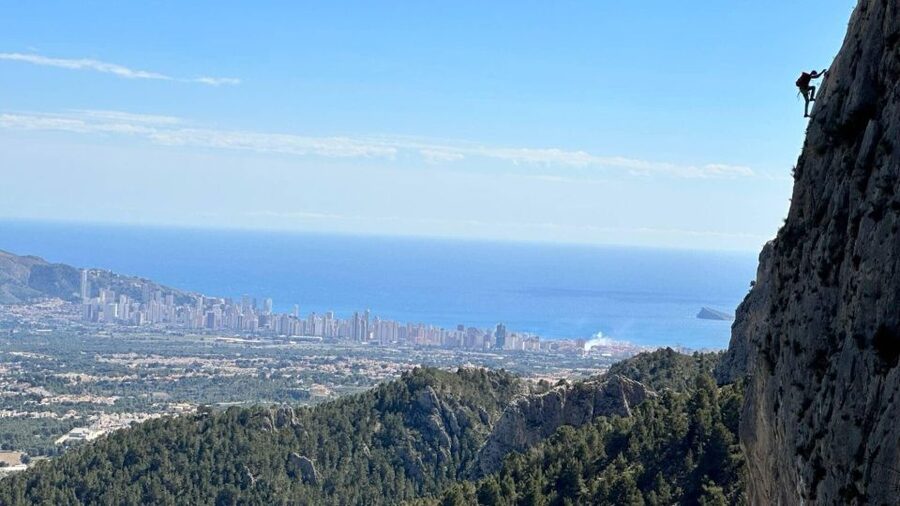
- Sleeping Lion viewpoint for big Costa Blanca photos with Altea, La Nucia, Callosa, and Benidorm in the background.
- Abseils only for the descent means you must be comfortable using ropes, not just walking down.
- Small group size up to 8 helps the instructor keep an eye on you.
- Guides like Toni and Vincent are praised for being supportive, upbeat, and good at keeping people moving safely.
Entering the Ponoig Via Ferrata near Benidorm
This is a Benidorm area activity in the truest sense of the words. You base yourself around Benidorm, but the via ferrata starts in the nearby town of Polop, around 20 minutes away. The route itself is about 230 metres long, so you get a full session without it turning into an all-day endurance test.
What makes Ponoig different is the engineering style. Many via ferratas give you a path for the descent, so you climb, breathe, and then walk down. Here, the route keeps things athletic and aerial, because the descent is rope abseiling only. That changes the whole mental game. Your focus shifts from climbing technique to controlled, calm rope work.
More hiking and canyoning day trips from Valencia:
- From Valencia: Montanejos Guided Hike with Natural Pools
★ 4.5 · 1,741 reviews - From Valencia: Chulilla, Turia Canyon, Hanging bridges…
★ 4.9 · 139 reviews - Montanejos Hiking Tour & Thermal Pools from Valencia
★ 4.5 · 111 reviews
Getting to the meeting point and finding your guides
Meet at the Ponoig via ferrata car park. The meeting place is marked by a sign on the side of the road, so don’t wait until you’re right next to the climbing area to hunt for it. Plan to arrive at least 15 minutes early, so you can check in and get briefed without feeling rushed.
Your guides wear fluorescent orange Alicante Aventura t-shirts, which makes them easy to spot. Once the activity starts, there’s only a courtesy arrival window of up to 5 minutes. After that, the guides will need to move with the group, so being punctual matters more here than on a museum visit.
What you actually do in the 4-hour session
You should plan for a 4-hour experience from start to finish. That timing usually includes getting kitted up, safety instruction, the climb, the viewpoint pause, the walk to the abseil zone, and the rope descent.
Because the group is limited to 8 participants, you tend to get more individual attention than in bigger adventure groups. That matters on a route like this where your hands and feet must stay precise, especially when the clamps start to feel like a moving ladder.
Gear, safety brief, and why the equipment list matters
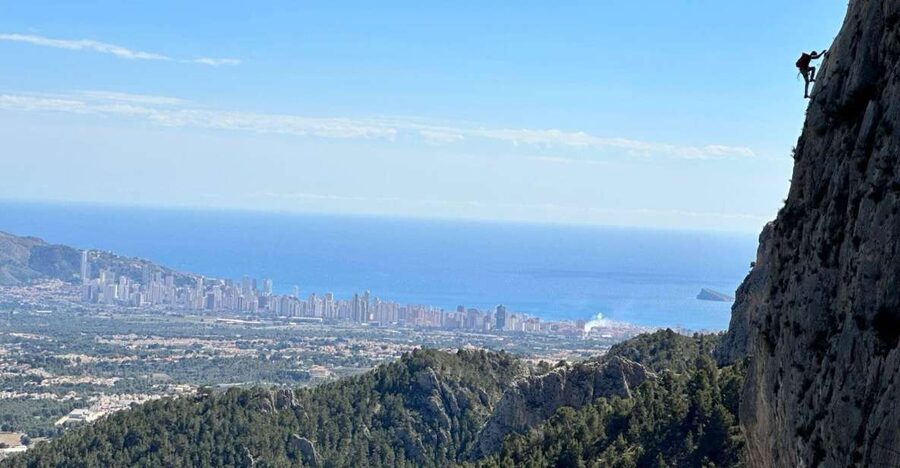
You do not show up in chalky hiking luck and hope for the best. The activity includes the key gear and the safety system you need: a helmet, a climbing harness, and a via ferrata security set. You’ll also have a medium mountain sports technician with you, plus personal accident and civil liability insurance.
This gear setup is not just bureaucracy. It’s what makes a K4 via ferrata feel doable, because it lets you focus on movement instead of second-guessing the basics. If you’ve never done a via ferrata, pay attention during the safety briefing and ask questions. The route is technical enough that small misunderstandings can become big stress.
A different sort of day out in Valencia:
- Valencia: Oceanogràfic Entry Ticket
★ 4.7 · 9,893 reviews - Valencia: 24 or 48-Hour Hop-on Hop-off Bus Ticket
★ 3.9 · 5,611 reviews - Valencia: Palosanto Flamenco Show Ticket
★ 4.8 · 3,876 reviews - Valencia: Catamaran Cruise with Sunset Option
★ 4.0 · 3,566 reviews
Climbing the iron-clamp route with two vertical sections
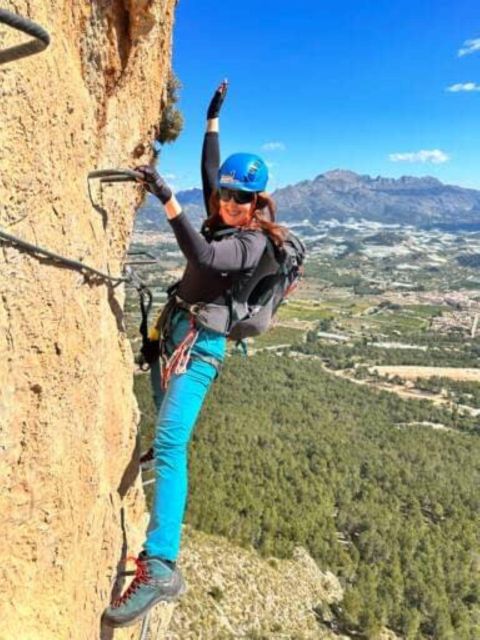
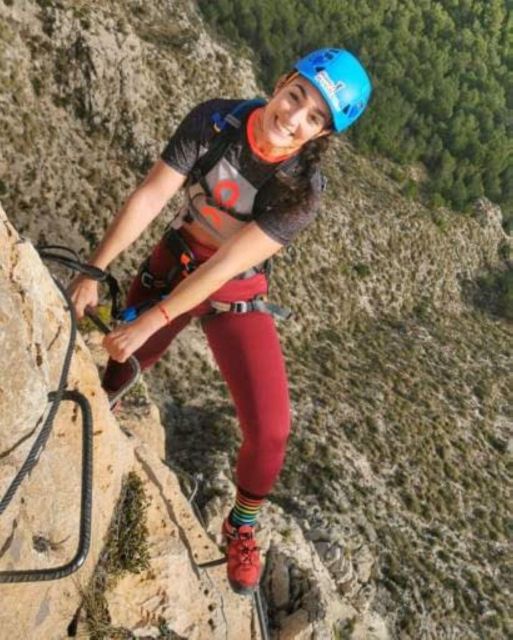
The Ponoig via ferrata is rated K4 and sits at about 230 metres of climbing. The route is divided into two well-differentiated vertical sections, and both are vertical, meaning you’re not relying on long scenic traverses to rest.
As soon as you start, you notice the design: a large number of clamps to grab, positioned close together. That makes the verticality feel more intense than the difficulty rating alone might suggest. Translation for you: expect a “hands on, move on” rhythm. You’ll likely keep your arms and forearms working, and you’ll feel the commitment of going up while the ground falls away.
The climb is not about superhuman strength. It’s about steady technique. Keep your weight where it belongs, use the clamps efficiently, and try not to rush the next move. If you’re a first-timer, this is also the stage where a supportive guide makes a big difference, because they can spot when you’re gripping too hard or stepping awkwardly.
The Sleeping Lion viewpoint: your reward break and photo window
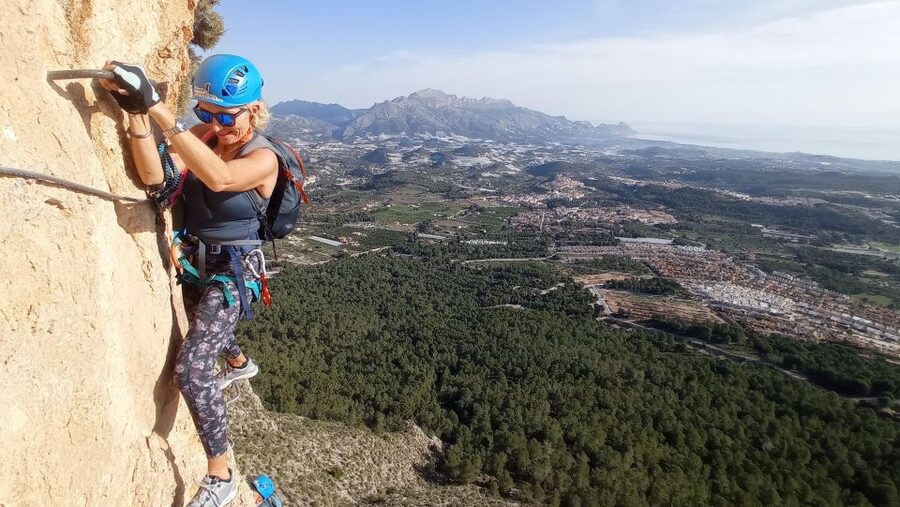
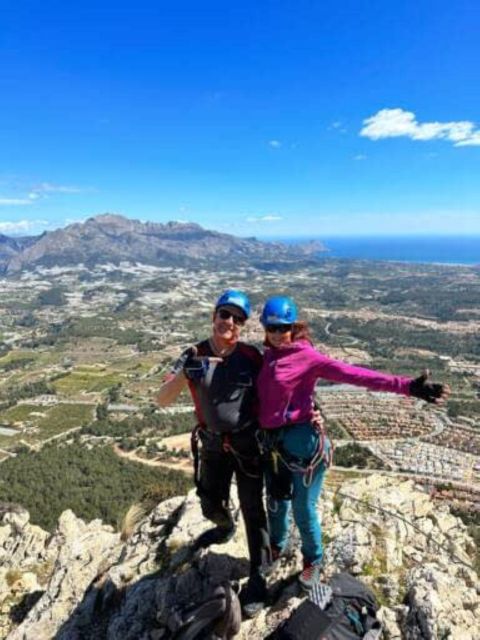
Once you reach the top, you arrive at the Sleeping Lion. This is where the experience gives you a real payoff pause. The viewpoint offers magnificent panoramas over the Costa Blanca, with Altea, La Nucia, Callosa, and Benidorm in the background.
Take advantage of the breath-and-bag moment. You’ll want a few seconds to reset your breathing and check your camera settings before the abseil phase steals your hands again. It’s also the best time to grab souvenir photos, because you’re higher, steadier, and the view is wide open.
This is not just a pretty rest stop. It helps you mentally close the loop of the climb, so the descent feels like a continuation instead of a new challenge that catches you off guard.
The descent choice: abseiling 25 and 35 metres by rope
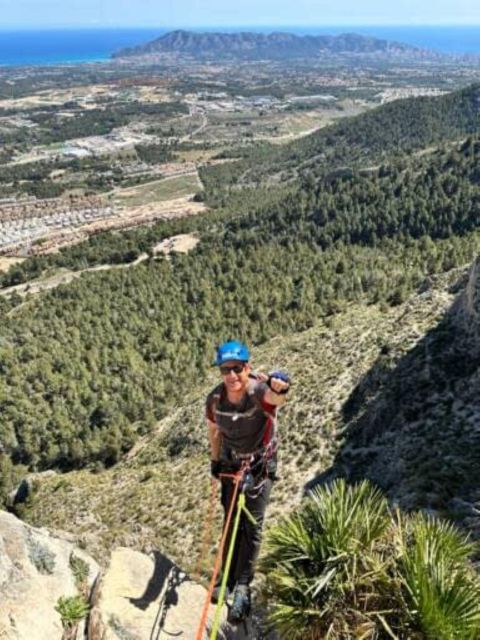
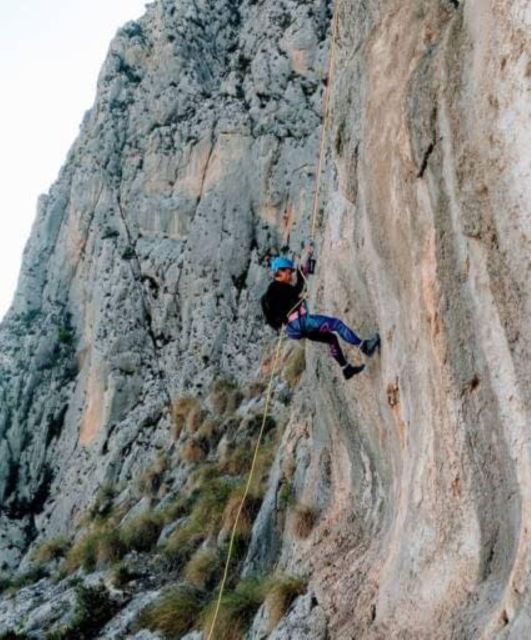
Here’s the key thing to understand before you book: the only way down is ropes. After the viewpoint moment, you follow a path through the mountain until you reach an area equipped for abseiling.
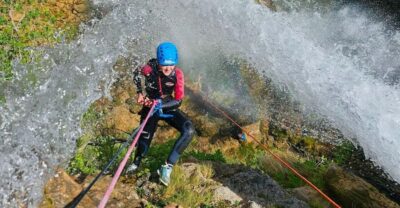
The rope descent includes two abseils, 25 metres and 35 metres. This is the part that separates “I tried it” from “I conquered it,” because your brain needs to learn a new kind of control. You’re not scrambling down and you’re not walking. You’re suspended, managing your position and your speed, while staying calm and following the guide’s instructions.
If you’re comfortable with heights and you can stay focused, you’ll probably enjoy this section for the same reason you enjoy roller coasters. If heights make you tense, take the guidance seriously and communicate. The technicians and the safety setup are there for a reason, and they can help you through the first meters so the rest becomes more automatic.
Who this via ferrata suits, and who should skip it
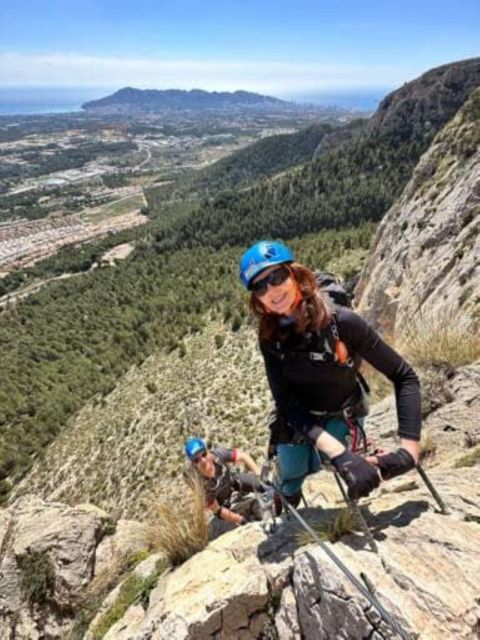
Ponoig via ferrata is for you if you’re willing to work your grip, keep a steady pace, and handle a controlled descent. It’s also a good fit if you like the idea of a small group where the guide can keep everyone moving together.
But the activity is explicitly not suitable for people with vertigo and not suitable for pregnant women. If either of those applies, choose a different experience. Also, if you’re coming in with zero comfort on ropes, be honest with yourself. You don’t need to be an athlete, but you do need to be able to follow instructions and stay relaxed once you’re on the system.
A practical note from the experience itself: wear sports shoes you trust. One key piece of advice in the feedback is that this is easier when your footing is secure.
Guide quality that makes the difference (Toni, Vincent, Donny, Johnny)
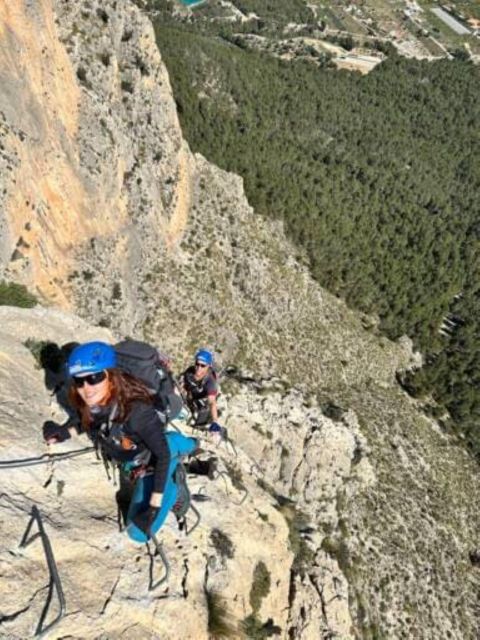
The guides are one of the strongest reasons this activity earns such high marks. People highlight how supportive and fun the instructors are, and how they help you reach the top safely without turning the session into a grim test.
In particular, guides Toni and Vincent are called out for giving people confidence and excellent vibes during the climb. If you go as a solo traveler or if you’re doing your first via ferrata, that matters. The activity includes instructor support in Spanish, English, and French, and good guiding makes the difference between feeling overwhelmed and feeling capable.
There’s also a useful real-world detail: one first-time participant found the guidance helped even when English was not the main language at first. The instructor explanations, plus careful listening and a bit of help from other participants, made it workable. On another solo day, the instructors Donny and Johnny made sure the key parts were explained in English so the participant felt included.
So here’s my practical takeaway: if your language is limited, don’t panic. Ask questions early, watch the technique, and rely on the guide for the important safety cues. That’s where communication really matters.
Price and value: what you get for around $65
At about $65 per person, this is not cheap in the way a beach day is cheap. But it also isn’t just a ticket to a rope trail. You’re paying for a full guided safety system and staff time.
The price includes:
- A medium mountain sports technician
- Helmet, harness, and via ferrata security set
- Photos of the activity sent to you by WhatsApp
- Personal accident and civil liability insurance
- Entrance to the Falconera via ferrata
That mix is where the value lives. You’re not renting random gear and hoping it’s correct. You’re covered for safety, guided by trained staff, and you get a photo delivery so you don’t have to rely on shaky selfie attempts during the hardest moments.
Also, small group size limited to 8 participants means the guide attention is less diluted. In a technical activity, that counts.
What to bring, and what to wear so you feel better on the wall
Bring a simple kit and keep it light. The essentials listed for you are:
- Snacks
- Sportswear
- Sunscreen
- Water
- Sports shoes
- A daypack
I’d add one mindset tip: plan to be a bit more sweaty than you expect. Even though the climb is not an hour of running, your arms and core are working. Sunscreen matters, because Costa Blanca sun can be relentless.
For shoes, don’t show up in slick soles or brand-new sandals. You want something with traction and support that stays comfortable while you test footholds and clamp positions.
Tips for your first via ferrata moment
If it’s your first via ferrata, the goal is not to look perfect. The goal is to finish relaxed. Keep these in mind:
- Listen closely in the safety briefing, because the system is only effective when you use it correctly.
- Move smoothly between clamps. Hesitation uses up energy.
- When you get to the top, reset your breathing before the rope work begins.
- If you feel height tension on the abseil, communicate and focus on one instruction at a time.
The best part of a great guide is that they turn nervous energy into a plan. The feedback you can count on here is that guides like Toni and Vincent are good at making people feel capable, not just checked off.
Should you book Ponoig via ferrata? A quick decision guide
Book it if you want a vertical challenge near Benidorm, a dramatic viewpoint at the Sleeping Lion, and the thrill of real abseiling down 25 and 35 metres. This is also a strong choice if you like guided adventure where safety gear, insurance, and photos are handled for you, not left to guesswork.
Skip it if heights make you tense, if you have vertigo, or if you’re pregnant. Also skip it if you hate rope-based descents. This is not a climb where you can simply walk away when you’re tired.
If you are moderately fit and you’re comfortable following instructions, this is the kind of half-day adventure that gives you a story you’ll remember long after the sun sets over the Costa Blanca.
FAQ
How long is the Ponoig via ferrata experience?
The duration is about 4 hours, including time for the guided climb and descent.
Where do I meet for the activity?
You meet at the Ponoig via ferrata car park. A sign on the side of the road marks the area.
What does the price include?
It includes a medium mountain sports technician, the technical equipment (helmet, harness, and via ferrata security set), photos sent via WhatsApp, personal accident and civil liability insurance, and entrance to the Falconera via ferrata.
What is the difficulty level?
The Ponoig via ferrata is rated K4.
Do I need to abseil on the descent?
Yes. The descent is via ropes only, with abseil descents of 25 metres and 35 metres.
Is it suitable for people with vertigo?
No, it is not suitable for people with vertigo.
Is it suitable during pregnancy?
No, the activity is not suitable for pregnant women.
What languages do the instructors speak?
Instructors are listed as Spanish, English, and French.
What should I bring?
Bring snacks, sportswear, sunscreen, water, sports shoes, and a daypack.
Newest Valencia write-ups
- Visit the most beautiful village in Valencia: Chulilla★ 5.0 · 14 reviews
- Valencia: Guided Mountaineering Experience★ 3.7 · 4 reviews
- Windsurf class on Valencia beach★ 4.3 · 4 reviews
- Valencia: Water Beer Bike Tour★ 4.0 · 6 reviews
- Valencia: Gourmet Food & Wine Tour★ 4.2 · 6 reviews
- VALENCIA ESSENZIALE + SITI PATRIMONIO UMANITÀ (ITALIANO)★ 4.7 · 3 reviews
- Valencia: VIP Sunset Cruise in Catamaran with drink★ 4.3 · 12 reviews
- Valencia: Visit by boat to the Caves of Sant Josep★ 5.0 · 3 reviews
Hiking & Canyoning Day Trips, compared.
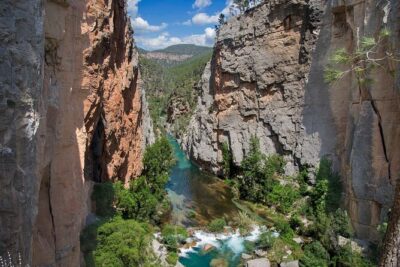
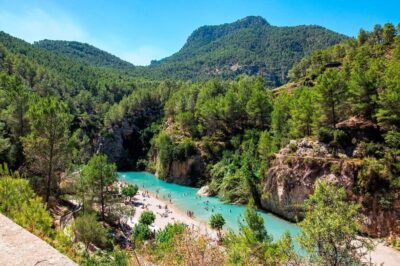
Montanejos Hiking Tour & Thermal Pools from Valencia
Read our review →
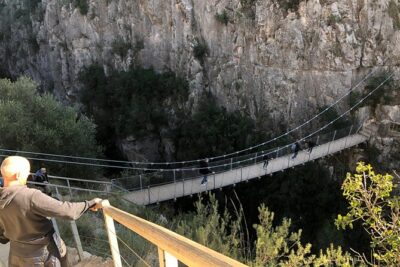
Hike Hanging Bridges and Canyon Túria – Chulilla – OFFICIAL GUIDE
Read our review →
Browse the lists this tour appears in