
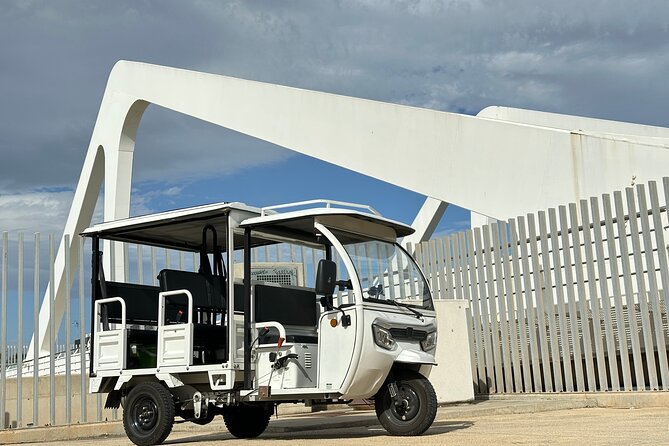
Reviewed · VALENCIA TUK-TUK TOURS
Valencia: Tuk tuk tour
If you want a quick, low-effort way to get your bearings in Valencia, this tuk-tuk highlights tour does the job. I like that it strings together major sights across the city, so you can compare old and new architecture without burning time walking.
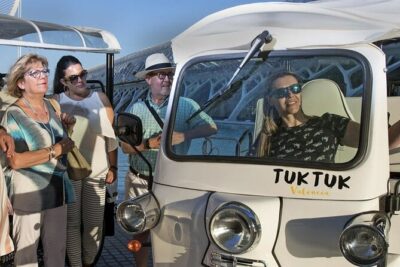
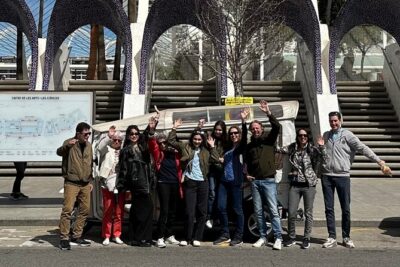
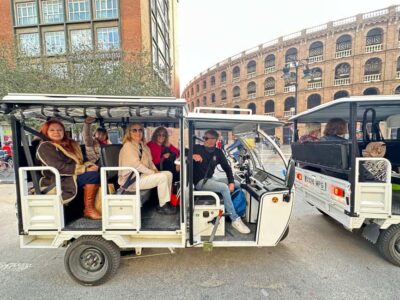
I also love the small group size and how the ride feels like an open-air “greatest hits” sampler. You get enough stops to take photos and ask questions, while still keeping the whole trip short.
One thing to consider: the tuk-tuk is open and you travel through city traffic, so sightlines and audio depend on where you’re sitting and how noisy the street is that day.
Key points I think you’ll care about
- Max 12 travelers, so it stays personal instead of cattle-car tourism
- One bottle of water per person plus a guide who works in multiple languages
- Frequent major-photo stops, including the Serrano Towers, beaches, and City of Arts and Sciences
- Open-air ride means views are great at street level, but tall buildings and hearing can be tricky
- Guides matter, and you’ll hear the same theme in the best ratings, friendly drivers like Tony, Salvador, and Silvio
Why a Tuk Tuk Valencia Highlights Tour Beats Trying to Walk Everything
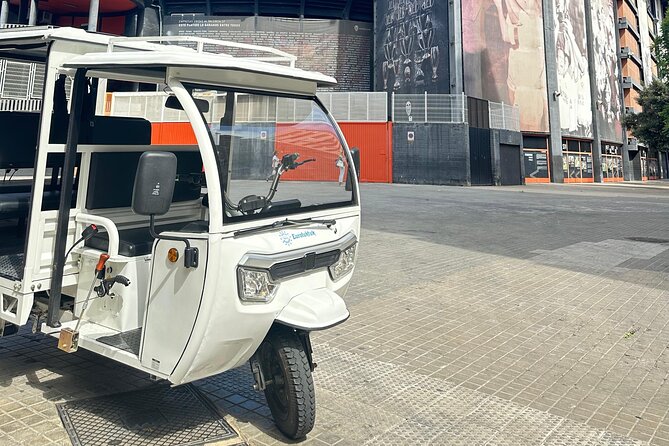
Valencia is one of those cities where the main attractions are spread out enough that a car-free plan can turn into a lot of zigzagging. This tour solves that with a fast, guided route by tuk-tuk, roughly 1 to 2 hours depending on how the day flows.
The best use of this type of tour is at the start of your trip, or any day you feel heat, jet lag, or time pressure. You’ll come away with a mental map: where the medieval gates sit, where the modern City of Arts and Sciences rises, and how the port and beaches connect to the rest of the city.
Also, the format helps you avoid the “should we really take a taxi for that one photo spot” problem. Instead of piecing together multiple rides, you let the driver move you from stop to stop and you focus on seeing.
More tuk-tuk tours in Valencia:
- Valencia: Complete Tuk-Tuk Tour Around the City
★ 4.8 · 793 reviews - Valencia Complete Tour by Tuk Tuk
★ 4.5 · 593 reviews - Valencia: 2-hour City Highlights Guided Tuk-Tuk Tour
★ 4.7 · 233 reviews
Price and Ride Time, What $32.44 Really Buys
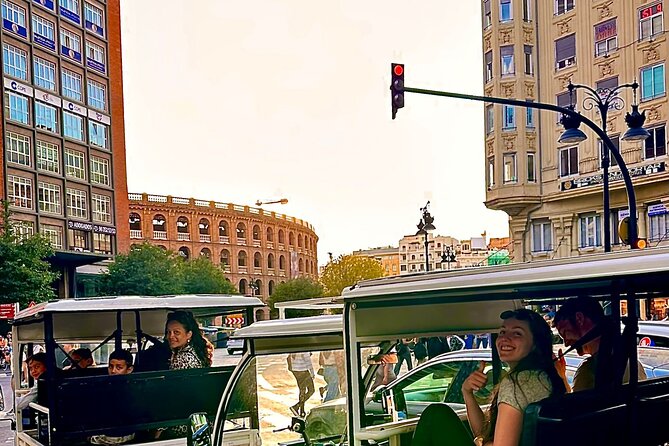
At $32.44 per person for about 1 to 2 hours, you’re paying for three things: transportation, guidance, and a tight highlights route. It isn’t a full-day immersion, but it is good value if your goal is to see the big monuments and neighborhoods without turning it into a marathon.
A small group matters here. With up to 12 travelers, you’re more likely to get quick answers when you ask questions, and the guide can keep everyone together. You’re also getting a bottle of water per person, which sounds minor until you realize how quickly Valencia heat adds up.
Compared with paying for individual tickets and separate taxis for scattered sights, this usually comes out as the easier, more predictable option. Just be clear on your own priorities: if you want deep, inside-focused time at every building, you may need extra sightseeing afterward.
Your Route in Plain English, From Medieval Gates to Modern Icons
This tour runs as a loop that starts and ends at C. de la Blanqueria, 3, Ciutat Vella. Along the way, you’ll pass or stop at major landmarks that represent different eras of the city, from Gothic fortifications to 20th-century memorial architecture to 21st-century design.
Exact stop duration can vary, but the order and types of places are consistent: defensive walls and gates first, then the port and beaches, then the modern science-and-arts zone, and finally a cluster of iconic city buildings that are perfect for photos.
If you enjoy collecting context, you’ll like how the guide ties each site to a bigger Valencia story: the city as a fortress, then a maritime hub, then a design-forward cultural capital.
Serrano Towers, Where Valencia’s Gothic Past Still Feels Defended
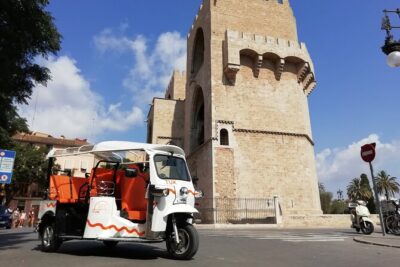
The Serrano Towers are a star stop because they are so clearly made for protection. Built between 1392 and 1398 by architect Pere Balaguer, they were part of Valencia’s medieval wall system and acted as a gate.
Look for the design details: two large polygonal towers with a central arch. It’s strong and simple, not decorative for decoration’s sake. Over time, these towers served several roles, including defense, imprisonment for nobles, and later recognition as a historical monument.
What I like for visitors is the choice they offer: you can explore the interior and, if the situation allows, climb for one of the best city views. Even if you skip the climb, seeing the towers up close makes it easier to understand why the city grew where it did.
A different sort of day out in Valencia:
- Valencia: Oceanogràfic Entry Ticket
★ 4.7 · 9,893 reviews - Valencia: 24 or 48-Hour Hop-on Hop-off Bus Ticket
★ 3.9 · 5,611 reviews - Valencia: Palosanto Flamenco Show Ticket
★ 4.8 · 3,876 reviews - Valencia: Catamaran Cruise with Sunset Option
★ 4.0 · 3,566 reviews
The Sea Gate Memorial, A Modern Rebuild With Historical Weight
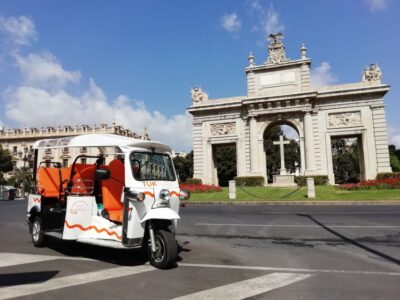
Next comes the Sea Gate, and the interesting twist is that it does not belong to the ancient medieval wall in its current form. It’s a modern reconstruction rebuilt in 1946 to honor those who died in the Spanish Civil War.
The gate is made from white stone and features three arches, with the central arch the largest. This is the kind of stop that’s quick but meaningful because it shows how Valencia remembers its 20th-century past in public space.
Even if you do not go deep into the story, the visuals are memorable. White stone arches against the surrounding urban fabric can make a great photo, especially in softer light.
Turia Gardens and the Flower Bridge, Seasonal Color on a Timed Schedule
Valencia’s Turia Gardens are a signature part of the city, and this tour includes a bridge built as an extra step over the gardens. The bridge opened in 2002 and is tied to a fun, practical detail: every four months, the flowers change.
If you care about seeing the best version of that scenery, you’ll want to think in cycles, not just dates. The route description even notes that some months can be less impressive than others, because the flower display updates on that schedule.
For your visit, the takeaway is simple. If the flower show is a big priority, time matters. If you mainly want architecture and a nice stroll-adjacent photo, you’ll still get value.
Mestalla Stadium, Football Culture and Calatrava Design
Then you’ll roll past Mestalla, home of Valencia CF, one of the city’s most emblematic stadiums. It opened in 1923, and the stadium’s design is credited to Santiago Calatrava.
What makes this stop stand out from many stadium photo ops is the atmosphere. The stands are steep, which brings fans closer to the pitch. From outside, you can already see the design logic meant to create intensity.
I like including this kind of stop on a short tour because it helps you understand Valencia as a living culture, not just monuments. Even if you never catch a match, the stadium’s presence in the city tells you a lot.
Old Port Valencia, Veles e Vents and the Shipyard World

The tour shifts from architecture to atmosphere at the old port. The old port area covers about a million square meters and is full of activities tied to culture, innovation, business, and more.
Here’s what you’ll recognize:
- Veles e Vents: unique architecture with exhibitions, dance events, and arts
- Tinglados and the old shipyard: space connected to boats and water sports
- Over 800 private moorings, with service companies and sports clubs connected to sailing, diving, and kayaking
This stop works because it’s not just a view. It’s a sense of how Valencia functions as a maritime city.
If you like taking photos that show how people live and work, you’ll enjoy the variety. There’s often signage, boats, and activity that turns a simple stop into a mini window into local life.
Malvarrosa and Las Arenas Beaches, Sand, Food, and Sea Views
Valencia’s beaches are a big part of the identity, and this tour brings you there with enough time to get that seaside snapshot.
You’ll visit Malvarrosa, the city’s most famous beach. It has a story that stretches back to the mid-19th century, when it shifted from a flower area to the beach you know today. Expect wide, fine golden sand and easy access from the city, which helps explain why it’s popular with locals.
You’ll also see Las Arenas, a beach named after the old fishing quarter. Locals still call it Las Arenas after the old spa, which has since become a luxury hotel complex. The coast here is geared for visitors, with restaurants and entertainment, and at least one nightlife-focused spot is highlighted through the Marina Beach Club reference.
One practical note: because the ride is open-air and moving, you should treat the beaches as photo and viewpoint moments, not a full swim session.
City of Arts and Sciences, Calatrava and Candela at Full Scale
If there is a single modern stop you should not rush, it’s the City of Arts and Sciences. It’s a spectacular architecture and cultural complex associated with Santiago Calatrava and Félix Candela.
Construction started in 1996 and finished in 2009, with the idea of revitalizing the area into a world-class science, culture, and leisure zone. Even without going inside, you’ll feel why so many people use this as a must-do.
I like this stop on a tuk-tuk because it gives you multiple angles quickly. From the seat, you can look up at the design, then look across the complex, and finally snap a couple of photos before moving on.
Central Market and Nearby Icons, A Design-Rich Break From Walking
Shopping is not the main purpose of this tour, but you still get one of the best cultural choices in Valencia: the Central Market area.
The tour description points to a modernist market building opened in 1928, designed by Francisco Mora with a large glass dome and colorful mosaic and ornate column details. It was renovated in 2003 into a space with restaurants, cafes, and gourmet options.
This is a valuable stop even if you only plan to browse briefly. Markets like this connect you to local eating and daily life. If you time it right, you can grab something quick to eat and keep your day moving without losing the thread of your route.
Bullring, Estación del Norte, and Quart Towers, the Photo Checklist Finish
The last stretch includes several landmark buildings that are easy to recognize and great for “I was there” photos.
The Bullring opened in 1859 and is one of Spain’s most emblematic arenas. It’s a neoclassical structure with seating for around 10,000 and a circular brick design inspired by the Roman Colosseum, including Doric columns. Beyond bullfighting, it hosts cultural events and concerts.
Next, Estación del Norte, opened in 1917, is a modernist railway station designed by Demetrio Ribes. Expect colorful ceramics, Valencian-style tiles, and decorative details that show regional identity. There’s also an airy lobby/waiting feel that can feel almost theatrical from the outside looking in.
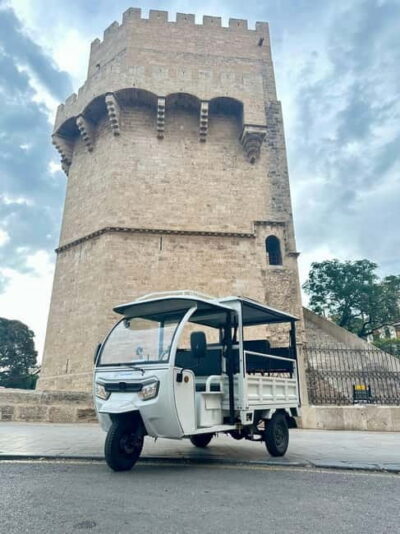
Finally, you get the Quart Towers, medieval city gates built between 1441 and 1460. They sit on the road to Quart, connecting Valencia toward the west and north. The construction is robust, with two cylindrical brick towers linked by a wall and a large arch, plus Gothic touches. Damage from the War of Independence led to restoration in the 19th century.
This cluster is useful because you’re not just collecting icons. You’re connecting the dots between how the city moved, defended itself, and later re-invented itself for culture, rail travel, and public events.
What the Best Reviews Get Right, Plus the Stuff You Should Guard Against
The strongest feedback patterns are consistent: guides and drivers tend to make the ride fun, efficient, and question-friendly. I like that multiple guide names show up with the same theme, including Tony, Salvador, Silvio, Francisco, Sebastian, and Christian. People also highlight that the tour gives you a sense of Valencia that you can’t get as easily on foot in a short window.
Two other practical wins come up again and again. First, people enjoy that it’s a less strenuous way to cover lots of ground, especially when the weather is hot. Second, the tuk-tuk can access areas where buses and cars do not, which helps the route feel more flexible.
Now, the watch-outs are real. The open tuk-tuk design can limit what you see if your view needs to go way above street level. Also, traffic noise can be a factor, so if you care about hearing every detail, plan to ask questions rather than trying to catch everything over street sound.
Time can also be affected by traffic. And in at least one case, the schedule changed in a way that reduced the tour time. You cannot control city congestion, so your best move is to arrive early and stay mentally flexible.
Getting the Most From the Seat, Not the Screens
This kind of tour is about perception. A few small choices can make the experience better fast.
- Arrive at the meeting point on time and take a minute to confirm you’re in the right group. The meeting point is C. de la Blanqueria, 3, and it’s in Ciutat Vella.
- Bring a light layer if you’re sensitive to wind off open vehicles, especially if it’s breezy. One guide note suggests dressing warmer.
- If you want interior views at the Serrano Towers, treat it as conditional and ask your guide what’s possible on your day.
- For photos, think about angles. Use the stop time for clear shots, then keep moving to avoid the stress of scrambling.
Also, remember what this tour is designed to do: give you a fast overview. After you ride, you’ll know where you want to return for more time on your own.
Should You Book This Valencia Tuk Tuk Tour?
Book it if you want a time-smart orientation to Valencia, especially if you have only a few days and you need to cover a lot without walking all day. It’s also a great fit if you prefer a guided story told while you move between neighborhoods, with built-in photo moments at major landmarks like the Serrano Towers, City of Arts and Sciences, and the beaches.
Pass or add a different plan if your top priority is long, slow, inside-the-details visits to every stop. This tour is short for a reason, and it moves on.
My rule of thumb: if you want the big monuments plus a map of where everything sits, this is a strong choice. Then you can spend the next day doing the things you actually loved most.
FAQ
How long is the Valencia tuk tuk tour?
It runs for about 1 to 2 hours.
What is the price per person?
The price is $32.44 per person.
What languages are the guides available in?
The tour includes a guide in English, along with Spanish, Portuguese, Italian, and German.
What is included in the tour?
You get one bottle of bottled water per person. A multi-language guide is included as well.
Is tipping included?
No, tip is not included.
Where does the tour start and end?
It starts at C. de la Blanqueria, 3, Ciutat Vella, 46003 València, and ends back at the same meeting point.
Can I bring a service animal?
Yes, service animals are allowed.
What is the cancellation policy if I need to change plans?
You can get a full refund if you cancel at least 24 hours in advance. If you cancel less than 24 hours before the start time, the amount paid is not refunded.
Newest Valencia write-ups
- Visit the most beautiful village in Valencia: Chulilla★ 5.0 · 14 reviews
- Valencia: Guided Mountaineering Experience★ 3.7 · 4 reviews
- Windsurf class on Valencia beach★ 4.3 · 4 reviews
- Valencia: Water Beer Bike Tour★ 4.0 · 6 reviews
- Valencia: Gourmet Food & Wine Tour★ 4.2 · 6 reviews
- VALENCIA ESSENZIALE + SITI PATRIMONIO UMANITÀ (ITALIANO)★ 4.7 · 3 reviews
- Valencia: VIP Sunset Cruise in Catamaran with drink★ 4.3 · 12 reviews
- Valencia: Visit by boat to the Caves of Sant Josep★ 5.0 · 3 reviews
Valencia Tuk-Tuk Tours, compared.

Browse the lists this tour appears in