
Reviewed · HISTORICAL TOURS
Essentials of Valencia and its World Heritage Sites
Valencia is the kind of city where you can learn a lot without feeling trapped in a museum. This guided walk takes you through the historic center with three UNESCO World Heritage highlights in one go, so you can spend your time sightseeing instead of map-scrolling.
I especially like how it combines practical orientation with real context. You’ll get pointers on the key landmarks along the way, plus clear explanations of what you’re seeing, from the Fallas connection at City Hall to the trading-world behind the Silk Exchange. Guides like Maria and Sara come up in the reviews for exactly that mix of warm delivery and solid facts.
The only real drawback to plan around is that it is a short, paced walk. Some entry details can also vary on evening tours in August and September, so it’s smart to double-check which time slot you book.
Key highlights worth showing up for
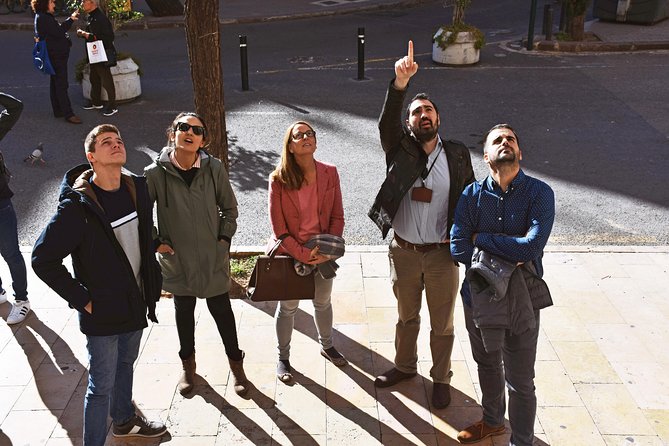
- Three UNESCO stops in about two hours, including La Lonja de la Seda (Silk Exchange)
- No getting lost because the guide keeps the route simple through the historic center
- Fallas at Placa de l’Ajuntament, explained as Valencia’s 2016 UNESCO addition
- Central Market context, including how the Mediterranean diet connects to daily life
- Inside the Silk Exchange, plus time in the Sala de Contratación
- Water Tribunal timing, with the weekly Thursday session at 12:00 noon mentioned in the route
Why this UNESCO walk feels efficient in Valencia’s old center
Valencia can overwhelm you in the best way. You’ve got grand Gothic buildings, lively public squares, and places that look like they belong in a postcard, and it’s easy to lose an hour just figuring out where to start.
This tour solves that problem with a clear route and a guide who keeps moving. The pace is set for a 2-hour experience, so you’re not stuck waiting around for slow groups or splitting off into mini-search parties. With a maximum group size of 25, it’s also tight enough that you usually get questions answered without turning the whole walk into a lecture.
The second reason I like it is the selection of sites. You’re not just seeing pretty facades. You hit places tied to Valencia’s UNESCO recognition in different ways: trade and civil architecture at La Lonja de la Seda, living tradition at the Water Tribunal, and the cultural framework around Fallas that was added to UNESCO in 2016.
The tradeoff is simple: it’s an essentials tour. If you want long, slow wandering, you’ll still want extra time later. But as a first pass through the city center, it’s a strong way to get your bearings quickly.
More history tours in Valencia:
- Valencia Old Town Tour with Wine & Tapas in 11th Century Historic Monument
★ 5.0 · 3,234 reviews - Valencia: Historical Walking Tour
★ 4.6 · 390 reviews - Valencia’s Greatest Food, History & Culture Tour
★ 5.0 · 129 reviews
Meeting at Estació del Nord, then into Valencia proper
The tour starts at Bailén – Estació del Nord, with a visit to the station area (about 20 minutes). That sounds like a random warm-up stop, but it’s useful. It helps you transition from Valencia’s transit world into the older streets, and it gives the guide a chance to set the story of the day before you hit the big squares.
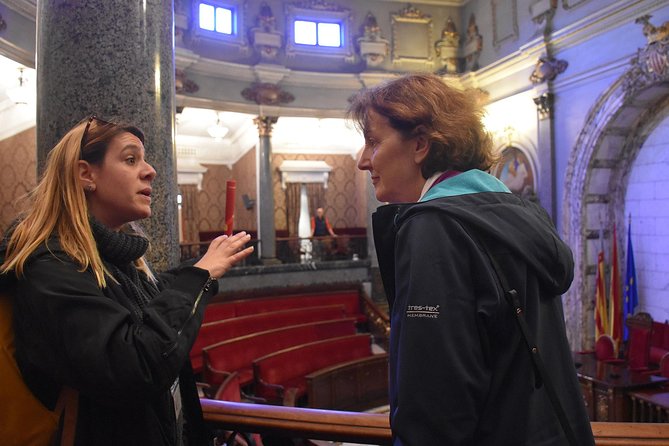
From there, you move into the heart of the city near City Hall. This is where the walk becomes more than just sightseeing. You’re stepping into the civic and cultural spine of Valencia, and the guide connects the buildings and squares to the traditions that still shape the city.
On this route, you’ll be outdoors for most of the time. In warmer months, plan on sun and carry water. In cooler months, dress in layers, because the Mediterranean can switch gears fast. Also, bring comfortable shoes. The tour is short, but you will walk enough that flip-flops are a bad idea.
A small plus: the station time is listed as free. That means the tour doesn’t pad the schedule with paid detours. You’ll spend more of the experience where it matters.
Placa de l’Ajuntament and Ajuntament de Valencia, with Fallas context
Two early stops focus on Placa de l’Ajuntament and then Ajuntament de Valencia. This is a smart pairing because these squares are tied to how Valencia celebrates itself.
Here, you’ll get the story behind the Fallas connection. Fallas became Valencia’s last UNESCO addition in 2016, and the guide frames the festivities as an open-air museum of short-lived monuments. The timing matters too. They run from March 15 to March 19, with music, traditional costumes, and that unmistakable smell of fireworks in the air.
Even if you’re not in town during Fallas season, this explanation helps you read the city differently. You start noticing how Valencia treats public space as part of the cultural stage, not just a place to pass through. The guide’s job in these stops is to make sure you see beyond the architecture and understand why the city feels the way it does.
For many first-time visitors, this is one of the stops that lands emotionally, because it turns a major holiday into something you can picture while you’re standing there. It’s also a good mental reset after the station area, since the squares feel more open and photogenic.
Central Market and the Mediterranean diet, food culture without the hard sell
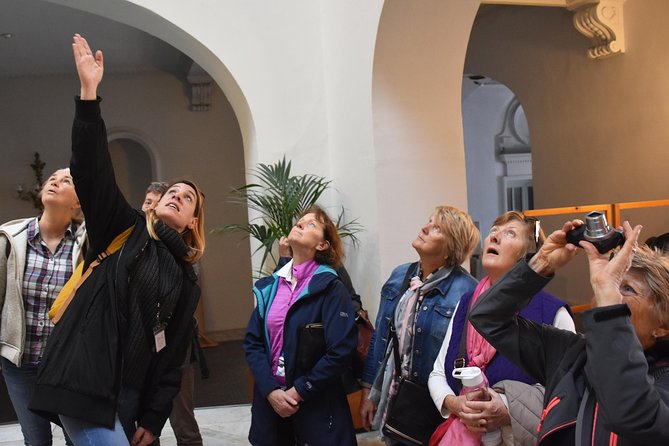
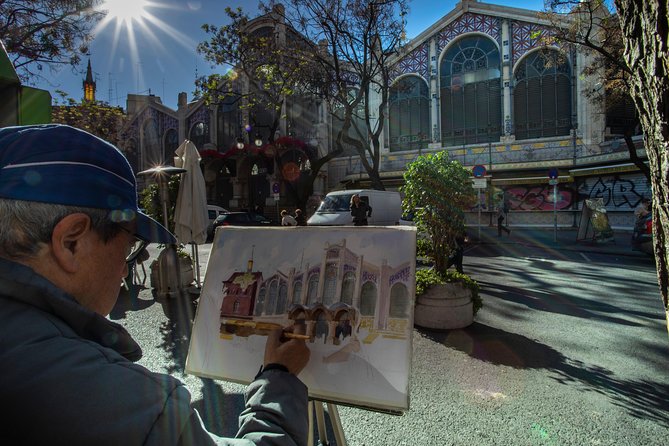
Next up is Mercat Central de Valencia, Valencia’s Central Market. The key thing here is what the guide does with the building. You get an explanation of the market and how the Mediterranean diet connects to everyday life.
This is valuable even if you are not planning to do a full food tour. The market building is a sight, but the diet context gives you a better sense of why markets matter in Valencia. It’s not just shopping. It’s local rhythm.
Timing is another practical detail. The stop is around 10 minutes, and the market admission is listed as free. That makes it a light but meaningful stop, not something that hijacks your morning or afternoon.
One caution: the information says evening tours in August and September at 6:30 pm do not include entrance. So if you want to go inside the market areas, pick a daytime slot when entry is included for the stop. If you end up on an evening departure, you might still see the exterior and get the explanation, but don’t count on full access.
If your travel style is more architecture and culture than food shopping, you’ll still get something out of this. And if you do love food, it’s a great starter that helps you decide what kind of snack or meal to chase later.
A different sort of day out in Valencia:
- Valencia: Oceanogràfic Entry Ticket
★ 4.7 · 9,893 reviews - Valencia: 24 or 48-Hour Hop-on Hop-off Bus Ticket
★ 3.9 · 5,611 reviews - Valencia: Palosanto Flamenco Show Ticket
★ 4.8 · 3,876 reviews - Valencia: Catamaran Cruise with Sunset Option
★ 4.0 · 3,566 reviews
Entering La Lonja de la Seda: the Silk Exchange takes center stage
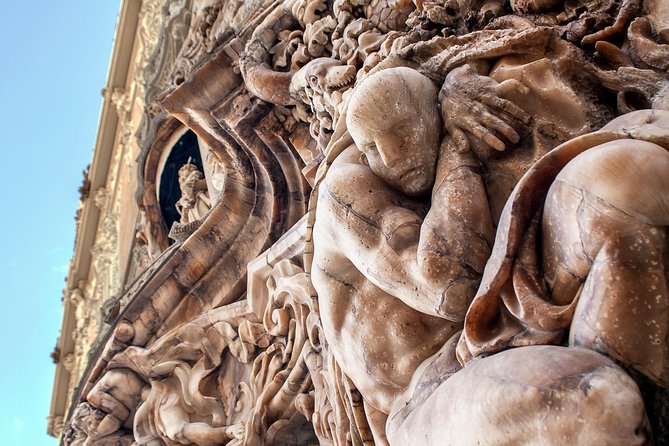
The tour’s biggest draw is La Lonja de la Seda, commonly called the Silk Exchange. This is where the UNESCO value becomes physical. You actually enter the building for about 30 minutes, and admission is included.
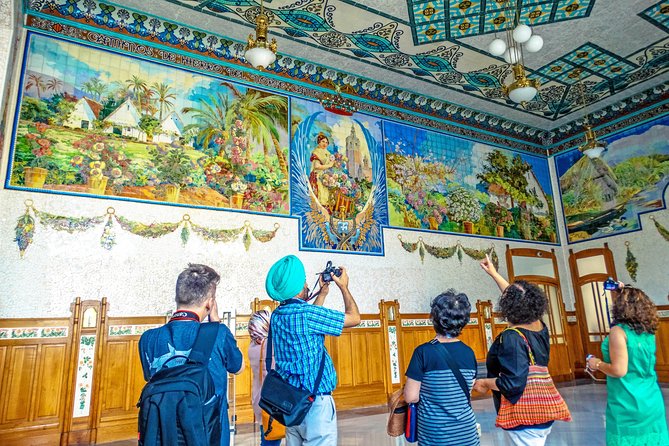
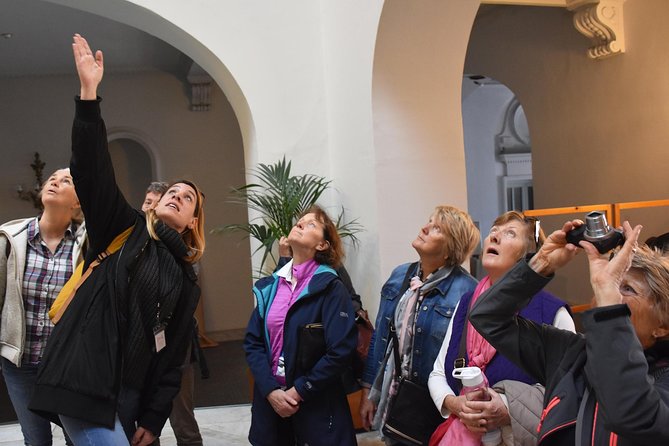
La Lonja de la Seda is a masterpiece of civil Gothic architecture and it became a World Heritage Site in 1996. The standout space you’re guided through is the Sala de Contratación. Think columns, vaults, and ribbing that create a sense of order and power. It’s easy to miss that when you just glance at the exterior, but inside, the building explains itself.
Why it matters for your day: this is one UNESCO site you’ll feel in your body. The architecture is not passive. It shapes how you move, where you look up, and how you picture the city when trade and prosperity were driving Valencia’s rise.
The reviews back up what you’ll experience here, with strong praise for how guides connect architecture to history and keep it lively. Guides such as Sara and Maria are repeatedly singled out for making the buildings understandable without turning it into a textbook.
Even with all that praise, don’t expect this to replace a deep, separate architecture visit. The time is limited. But it’s long enough to get the main features and walk away with clear mental images, like what the Sala de Contratación looks like and why it symbolized an era.
Another evening note: the data also says that for evening tours in August and September at 6:30 pm, entrance for La Lonja de la Seda is not included. If you care about going inside, make sure your booking matches your priorities.
Plaza de la Virgen and the Water Tribunal’s weekly rhythm
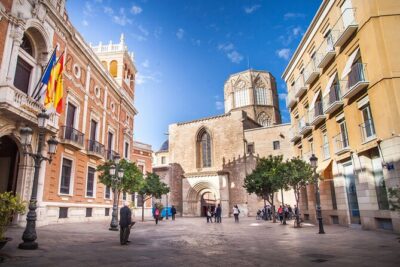
The last big named stop is Plaza de la Virgen. This is tied to the Tribunal of the Waters, which has UNESCO Intangible Heritage status since 2008.
What makes this part of the tour especially interesting is timing. The Tribunal of the Waters meets every Thursday at 12:00 noon at the Apostles’ Gate of the Cathedral. Your guide points you toward the location, so you understand where the tradition happens and why it still feels alive in Valencia.
If your visit happens to land on a Thursday near noon, you may be able to connect the explanation you heard with the real thing. If not, you can still use this stop to understand Valencia as a city where formal tradition and daily life share the same street corners.
The stop itself is around 15 minutes and admission is free. It’s not trying to overstuff you with facts. It’s giving you one clear thread: a centuries-old water dispute system that still runs on schedule, in a public setting you can locate in the city.
This ending works well because it shifts the focus from buildings and institutions to living practice. It’s a nice contrast to La Lonja, which is about the world of contracts and commerce. Together, they show different kinds of “heritage,” one made of stone, the other made of people.
Value, time, and how to plan your day around the 2 hours
Let’s talk value, because at $20.85 per person for an about 2-hour guided walk, you need to know what you’re really buying.
You’re paying for three things:
- A professional guide who explains what you’re seeing (not just walks you past it)
- Access value, including entry to La Lonja de la Seda (the only stop explicitly marked as ticket included)
- Time saved by having a fixed route, so you don’t waste your first day in Valencia hunting down the right streets
The free elements matter too. Estació del Nord visit time is free, Placa de l’Ajuntament and Ajuntament de Valencia are free stops, Central Market is listed as free for the visit, and Plaza de la Virgen is also free. The only clear paid access piece is the Silk Exchange.
The group size, maximum 25 travelers, is a plus for comfort and questions. A smaller group often means you’re not stuck with your ears turned off, especially in places like La Lonja where explanations benefit from clear listening.
The mobile ticket is another convenience. It reduces hassle at the start, and you can focus on finding the meeting point and getting moving.
Two practical planning tips:
- Arrive at the start point a bit early at Estació del Nord so you can settle before the guide starts.
- Plan to give yourself extra time afterward near the old center. This tour gives you the skeleton. You’ll want to add the muscles later.
Also note the tour is not tied to transportation. It explicitly does not include transport to or from the meeting and ending point. So factor in your own tram or taxi plan.
Who this tour suits best, and who might want a different option
This is the right kind of tour for you if:
- You’re visiting Valencia for the first time and want a structured introduction
- You like UNESCO sites but don’t want to spend an entire day hopping between them
- You enjoy architecture and civic culture, not just casual wandering
It also works well if you want recommendations for how to continue your trip, since the guide is set up to talk about what to see next and how to move around the center.
I’d consider a different option if:
- You want a long, slow experience with minimal group movement
- You’re traveling on a tight schedule where a 2-hour block is too rigid
- You specifically want evening access inside La Lonja or the market in August and September, since evening tours at 6:30 pm do not include entrance for those listed stops
Family tip: children must be accompanied by an adult, and the tour says most travelers can participate. So it’s not framed as a super specialized activity. Still, bring the basics for kids, like water and sun protection.
Should you book this Essentials of Valencia UNESCO walk?
Yes, if you want a high-value first day plan that hits UNESCO highlights without the stress of navigation. For the price, the best part is that you get a guide-led route plus entry to La Lonja de la Seda, which is the kind of place that repays you when someone explains what you’re looking at.
I’d book it soon if it fits your dates, because it’s commonly booked about 21 days in advance. And if you care about inside access to both La Lonja de la Seda and the Central Market, choose a daytime tour rather than the August and September 6:30 pm slot.
If your goal is to get your bearings, understand Valencia’s civic and cultural identity, and leave with a short list of places to revisit later, this tour checks those boxes.
FAQ
How long is the tour?
It runs about 2 hours.
What UNESCO sites does the tour focus on?
You’ll see La Lonja de la Seda (Silk Exchange) and the Tribunal of the Waters, and you’ll also learn about Valencia’s UNESCO connection to Fallas.
Is the Silk Exchange entry included?
Yes. Entrance to La Lonja de la Seda is included.
Are other entrances included, like Central Market?
The Central Market visit is listed as free. For evening tours in August and September at 6:30 pm, it notes that entrance is not included for the market.
What happens at Plaza de la Virgen during the tour?
You’ll learn about the Tribunal of the Waters, which takes place every Thursday at 12:00 noon at the Apostles’ Gate of the Cathedral.
Where do I meet and where does the tour end?
You start at Bailén – Estació del Nord in Valencia. You end at Carrer del Micalet, 7, in Ciutat Vella.
Is transportation to and from the tour included?
No. Transportation to and from the meeting and ending point is not included.
Can I cancel, and how far in advance?
Free cancellation is available. You can cancel up to 24 hours in advance for a full refund.
Is this tour suitable for children?
Children must be accompanied by an adult. The tour says most travelers can participate.
Newest Valencia write-ups
- Visit the most beautiful village in Valencia: Chulilla★ 5.0 · 14 reviews
- Valencia: Guided Mountaineering Experience★ 3.7 · 4 reviews
- Windsurf class on Valencia beach★ 4.3 · 4 reviews
- Valencia: Water Beer Bike Tour★ 4.0 · 6 reviews
- Valencia: Gourmet Food & Wine Tour★ 4.2 · 6 reviews
- VALENCIA ESSENZIALE + SITI PATRIMONIO UMANITÀ (ITALIANO)★ 4.7 · 3 reviews
- Valencia: VIP Sunset Cruise in Catamaran with drink★ 4.3 · 12 reviews
- Valencia: Visit by boat to the Caves of Sant Josep★ 5.0 · 3 reviews
Historical Tours, compared.
Valencia Old Town Tour with Wine & Tapas in 11th Century Historic Monument
Read our review →

Valencia’s Greatest Food, History & Culture Tour
Read our review →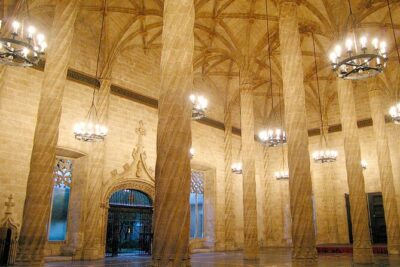
Essential Valencia and World Heritage Sites (English)
Read our review →
Genuine Valencian tapas tour with a pinch of History
Read our review →Browse the lists this tour appears in